
Context Rot: Why Stuffing a 1M Token Window Makes AI Dumber

More context should mean better answers. That is the promise. Feed the model everything and watch it perform.
Except it does not work that way. There is a phenomenon called context rot, and it is quietly making your AI worse the more you stuff into it.
What Context Rot Actually Is
Context rot happens when the signal-to-noise ratio inside your prompt collapses. Every token you add dilutes the weight of every other token. The model is not reading your context the way you read a document -- it is running attention across everything simultaneously, and that attention has limits.
When your context window holds 800 tokens of sharp, relevant information, the model focuses well. When it holds 800,000 tokens of everything you could possibly include -- old conversation turns, duplicated instructions, background documents you added just in case -- the model starts missing things that should be obvious.
Researchers have a name for the pattern: the lost-in-the-middle problem. Models reliably lose track of information placed in the middle of very long contexts. The beginning and the end stay salient. Everything in between blurs.
Why a 1M Token Window Does Not Fix This
The race to bigger context windows is real. Gemini 1.5 Pro pushed to 1 million tokens. Claude 3.5 supports 200k. OpenAI has been expanding steadily. The narrative is that bigger windows mean better AI.
But window size is not the same as comprehension quality. A model with a 1M token context that is filled with 900k tokens of loosely relevant material will underperform the same model given 50k tokens of curated, relevant context. The window is a ceiling, not a target.
Longer contexts also cost more. Every token in your context is a token you pay for in API calls. A bloated context does not just hurt quality -- it inflates your bill on every single inference.
How Most People Make It Worse
The instinct when an AI seems to forget something is to add more context. Paste in more background. Include more history. The reasoning feels sound: if it forgot, give it more to work with.
This is usually the wrong move. You are adding noise alongside the signal you actually need. The model's attention gets pulled toward irrelevant tokens, old decisions, and outdated framing you included three sessions ago.
The same pattern plays out with memory systems that store everything without curation. Every interaction logged, every preference noted, every conversation turn preserved. The memory grows and grows. And as it grows, the AI gets slower, noisier, and less precise.
Curated Memory Beats Brute-Force Context
The answer is not a bigger window. It is smarter loading. A well-designed memory layer does not dump everything into context -- it retrieves only what is relevant to the current task.
Think of it like a good research assistant versus a hoarder. The hoarder keeps everything and cannot find anything when it matters. The research assistant knows where things are and brings you exactly what you need for this conversation, not a comprehensive archive of every conversation you have ever had.
This is the design principle behind Kumbukum. Rather than persisting a monolithic blob of memory that gets dumped wholesale into every session, it retrieves targeted context -- the memories, decisions, and preferences that are actually relevant to what you are doing right now.
The Compounding Cost of Stale Context
Context rot compounds over time. A project that started six months ago has accumulated decisions, rejected approaches, outdated assumptions, and old instructions that no longer apply. If all of that lives in your context or gets loaded from memory indiscriminately, the model is working against itself.
It surfaces old constraints that you already resolved. It weighs rejected approaches as though they are still live options. It gets confused by instructions that were true three months ago but have since changed.
Keeping memory curated – tagging what is still relevant, retiring what is not – is the difference between a persistent AI assistant and a persistent AI distraction.
What This Looks Like in Practice
Say you are using an AI assistant for a long-running development project. Over six months, you have built up context about your tech stack, your architecture choices, your team's preferences, and the specific problems you have already solved.
If you load all of that into every session, you get context rot. The model spends attention on things that do not matter for today's task. Your 200k token limit fills up with history before you have even asked your question.
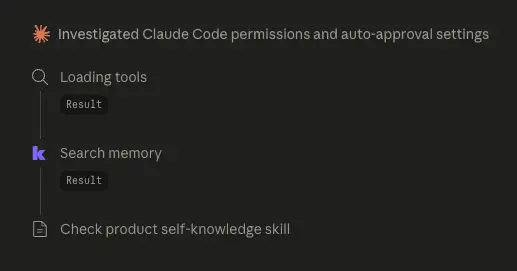
If instead your memory layer loads only the memories tagged as relevant to the current task -- the architecture decisions that constrain this specific feature, the patterns your team follows for this kind of problem -- the model gets a clean, focused context and gives you a better answer in fewer tokens.
Memory Systems That Get This Wrong
A lot of MCP memory servers miss this distinction. They are essentially append-only logs. Every interaction adds to the store. Every session loads the store. The result is a context that grows without bound and degrades without notice.
The Kumbukum blog covers this in more detail -- the core problem is that most memory implementations treat persistence as a storage problem rather than a retrieval problem. Storing everything is easy. Knowing what to surface is hard.
If you are using tools like Cursor, Claude Code, or any MCP-compatible client, a purpose-built memory layer that retrieves selectively will outperform a general-purpose note store. Kumbukum's MCP integration is built for exactly this pattern -- retrieval-first, not storage-first.
The Right Mental Model
Stop thinking about your AI's context as a canvas where you add things. Start thinking about it as a conversation with a very capable colleague who only benefits from relevant briefing.
You would not hand a colleague a 400-page archive before every meeting. You would give them a one-page brief on what matters today, with pointers to the history if they need it. That is what good memory management looks like.
The AI models are good. The context bloat is an infrastructure problem, not a model problem. Fix the infrastructure and the model performs the way it is supposed to.
Takeaway
A 1M token window is an impressive number. It is not a solution to context rot. Quality beats quantity at every scale. The AI teams that figure this out early -- and build their memory infrastructure around selective retrieval rather than brute-force storage -- will get dramatically better results than those still chasing bigger windows.
Context rot is avoidable. Persistent, curated memory is the fix. Try Kumbukum and see the difference between dumping everything and loading only what matters.
One more thing that matters: Kumbukum is open source. You can inspect the code, self-host it, or contribute at the GitHub repository.