
Institutional Memory for Code Review: Why AI Needs Your Repo PR History
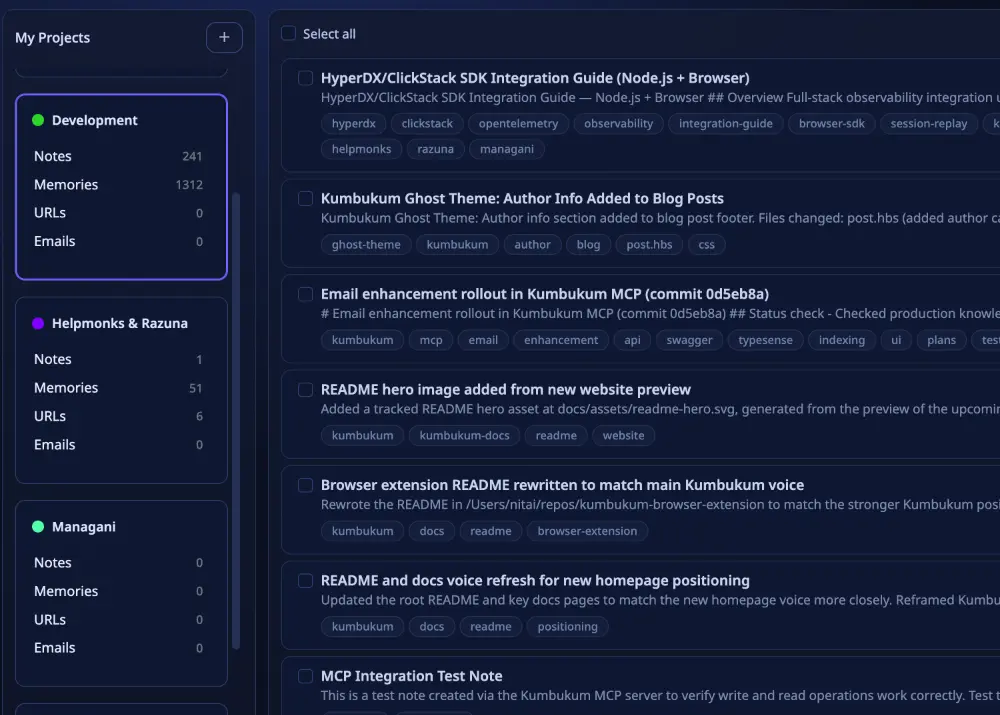
AI is great for code review. It catches typos, flags potential bugs, and even suggests refactors. But how often does your AI truly *understand* the 'why' behind your codebase? The architectural decisions made months ago? The debates settled in obscure pull request comments? The trade-offs that shaped the current design?
Too often, the answer is: never. Current AI code review tools operate in a vacuum. They see the code, but they don't see its history. They lack institutional memory. This leads to frustrating cycles of re-explaining, re-litigating old decisions, and ultimately, slower, less effective code review.
This isn't a failing of the AI's intelligence. It's a failing of the memory layer connecting it to your project's deep history.
The Blind Spot of Current AI Code Review
When an AI reviews code, it mostly works on the current diff and the surrounding files. It doesn't inherently know:
- Why a specific architectural pattern was chosen over alternatives.
- The historical context of a tricky bug fix, including previous failed attempts.
- The subtle compromises made due to technical debt or deadlines.
- The consensus reached in a heated debate during a past pull request.
Without this context, the AI functions as a linter on steroids, not a true architectural partner. It might suggest a design pattern you already considered and rejected, or flag a 'suboptimal' solution that was a deliberate trade-off for a specific, documented reason. The cost is not just in wasted AI tokens, but in human hours spent reminding the AI (and often, each other) of what's already been decided.
Beyond the Diff: What Institutional Memory Means for Code
True institutional memory for code review extends far beyond the current diff. It encompasses:
The Intent: Why a feature was built, its business value, and the initial problem it solved.
Design Evolution: How the architecture has evolved, the reasoning behind major refactors, and the constraints that shaped decisions.
Resolved Debates: Records of discussions, pull request comments, and issue tracker notes where key technical decisions were made, and alternatives ruled out.
Developer Preferences: Team coding standards, preferred libraries, and even individual developer quirks that an AI should learn and adapt to.
This isn't static data. It's a living, breathing knowledge graph that grows with your codebase and your team's understanding. Without it, every new AI code review starts with a significant handicap.
Why GitHub Alone Isn't Enough for AI Memory
GitHub is an incredible platform for code collaboration. It stores every commit, every PR, every comment. But it's designed for human consumption and interaction. For AI, it presents challenges:
Data Silos: PR comments, issue descriptions, and code are separated. The *connection* between a design decision in an issue and its implementation in a PR is often implicit.
Unstructured Data: While text, it's not explicitly structured as 'decisions', 'reasons', or 'rejected alternatives'. Extracting this semantically is hard for AI without guidance.
Overwhelming Volume: For large repos with years of history, feeding the entire GitHub history into an AI's context window is impractical due to token limits and the noise-to-signal ratio. It's a giant archive, not an intelligent memory.
What's needed is a layer that sits on top of GitHub, extracting, structuring, and connecting these disparate pieces of information into a coherent, queryable knowledge base specifically optimized for AI consumption.
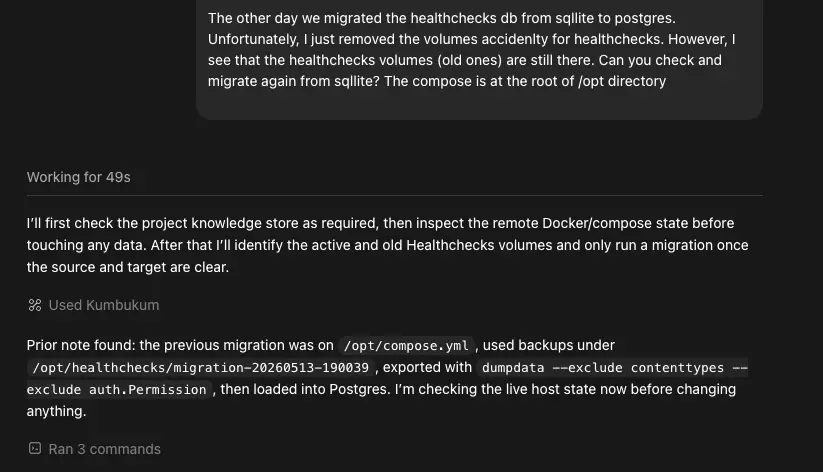
Building a Living Knowledge Graph for Code Review with MCP
The solution isn't more context. It's a better context, persistently managed outside the session, and optimized for AI recall. That's what Kumbukum enables through its MCP-compatible memory layer.
Kumbukum connects directly to your development workflow, including GitHub. It processes pull requests, issues, and discussions, extracting key decisions, arguments for and against specific approaches, and the eventual outcomes. This data isn't just stored; it's structured into a living knowledge graph.
When your AI code review tool (be it Claude Code, Cursor, or a custom solution) queries for context, it doesn't just get a blob of text. It gets precisely the relevant architectural decisions, past discussions, and rejected patterns related to the code it's reviewing.
This means:
Semantic Understanding: The AI understands the *meaning* of the decisions, not just the keywords.
Cross-Tool Access: Decisions made in GitHub comments are accessible to an AI in a Cursor session.
Reduced Repetition: No more re-explaining the same architectural constraints.
Efficient Recall: The AI retrieves only what's relevant, saving tokens and improving response quality.
This is how you give your AI institutional memory: by moving beyond raw data archives to a dynamically evolving knowledge graph that serves as a shared brain for your development team. Much like Razuna provides digital asset management for creative teams, Kumbukum delivers knowledge asset management for AI-powered development.
Benefits: Smarter AI, Faster Reviews, Better Code
The impact of a true institutional memory layer for AI code review is profound:
Smarter AI Assistants: Your AI tools become genuinely more capable, making suggestions that align with your project's unique history and architectural principles.
Faster Code Reviews: AI can proactively flag potential issues based on past discussions, identify re-litigated debates, and help maintain consistency, allowing human reviewers to focus on higher-level concerns.
Seamless Onboarding: New team members, both human and AI, can quickly ramp up by accessing the project's full historical context.
Improved Code Quality: By ensuring all decisions are consistently applied and understood, the overall quality and maintainability of your codebase improve.
This isn't about replacing human reviewers. It's about Helpmonks for shared inboxes, it's about augmenting them with a powerful, persistent memory that transforms code review from a reactive inspection to a proactive, context-rich collaborative process.
Give Your AI the History It Needs
Your codebase is more than just files on disk. It's a story of decisions, compromises, and evolving understanding. Without a way to consistently capture and share that story with your AI tools, you're leaving intelligence on the table.
Stop fighting against AI's inherent forgetfulness. Start leveraging a persistent memory layer that gives your AI assistants the full institutional context they need to truly excel at code review.
Try Kumbukum free and connect it to your GitHub workflow. Give your AI the institutional memory it deserves, and transform your code review process.